
Stockholm spots
One aspect of writing a book set in Stockholm that I’ve particularly enjoyed is researching all the places that existed in the 1940s that you can still visit now.
When writing certain scenes in Codename Charlotta, I’ve tried to use as many places like that as possible.
Some f these are obvious settings, like the Central Station, the exterior of which looks largely the same as did eighty years ago, and Humlegården park in the city centre.
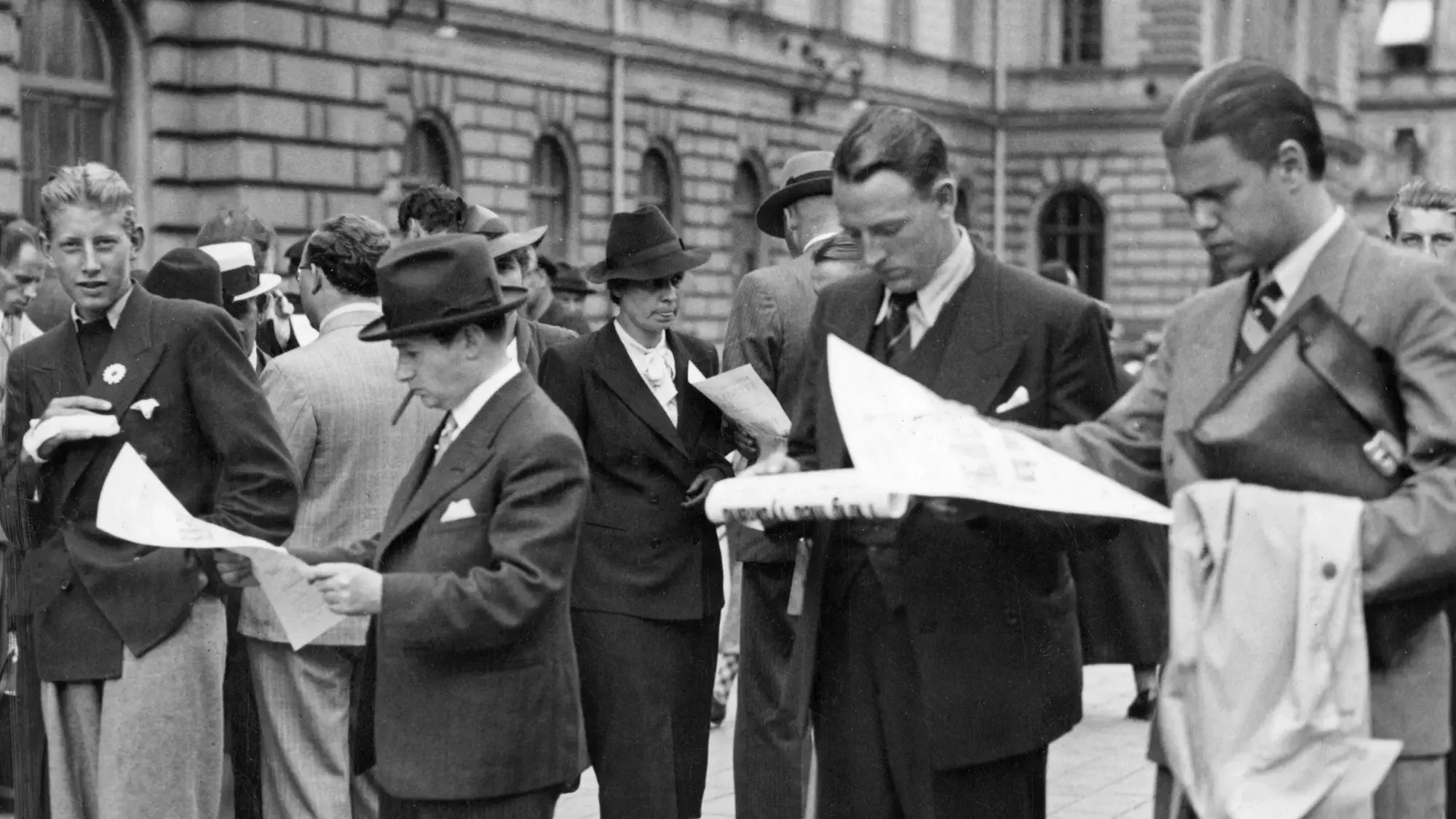
Reading the newspaper, two days after war broke out
More fun was choosing more obscure places for Ester, my main character, to go on her adventures. A meeting at Norra Begravningsplatsen, a cemetery north of the city, or in the Stora Skuggan woods.
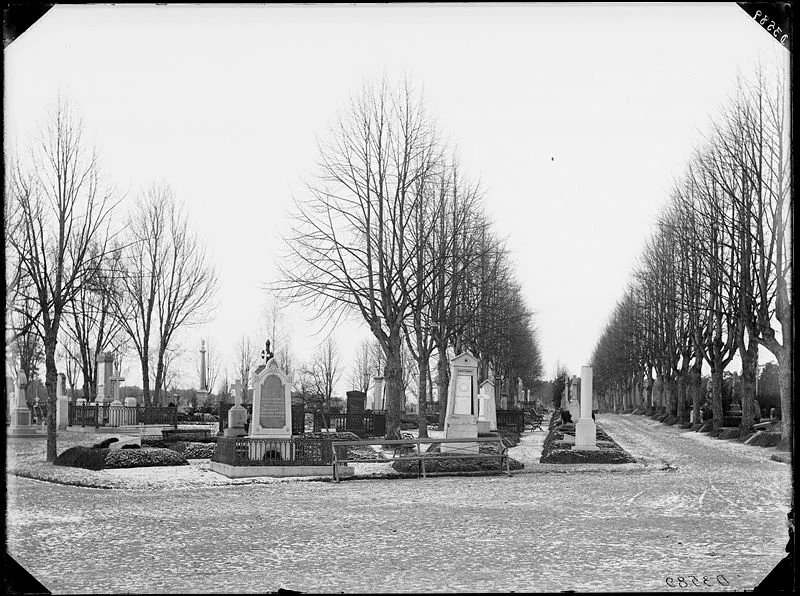
Norra Begravingsplatsen cemetery - photograph by Frans G Klemming (Stadsmuseet i Stockholm)
But the most fun of all came when I chose the restaurants that Ester visits around the city centre.
The first of these is Riche, which remains a popular bar and restaurant now. It first opened in 1893, inspired by Café Riche, a bistro in the second arrondissement of Paris.
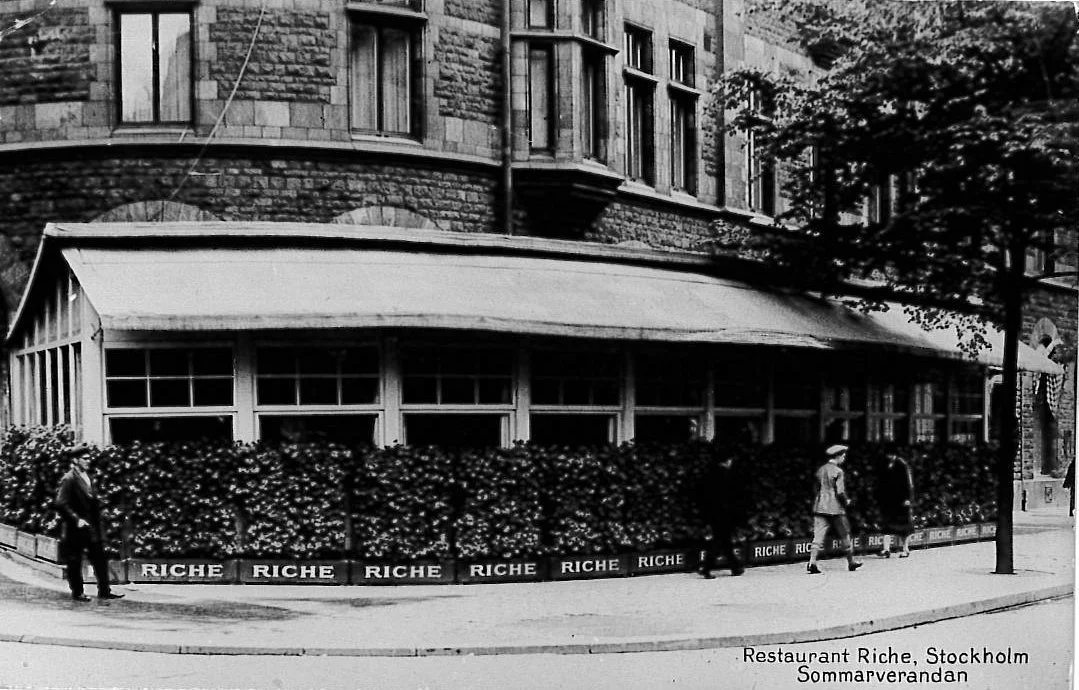
The exterior of Riche, with its summer veranda, in 1933
Next, Ester spends an evening with her girlfriends at Brända Tomten, on Stureplan, a dark and somewhat gloomy restaurant with a certain peculiar style of interior decoration.
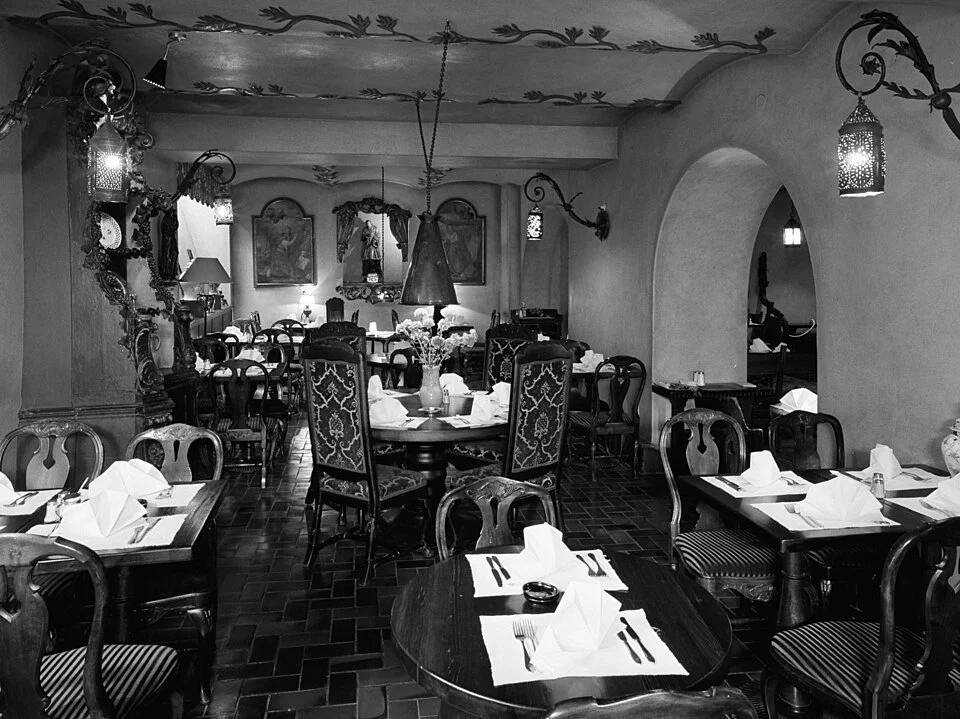
Interior of Brända Tomten - photograph by Sune Sundahl
Although Brända Tomten closed in 1987, it was replaced in 1991 by East, an Asian fusion restaurant that only closed its doors late last year.
After that, Ester is taken to dinner by a mysterious diplomat at the renowned Konstnärsbaren, more colloquially known as KB. Opened late in 1931, the restaurant was popular with the cultural elite of the city.
KB is still open today, serving traditional Swedish dishes.
After dinner, she suggests continuing the evening at Nalen, one of the leading dance venues in the city at the time, with swing and jazz bands playing there in the evenings. It could be quite a rowdy spot and was often packed with Nalensnajdare, the fashion-conscious young people who hung out there.
Nalen today is a restaurant and concert venue, with a wide range of visiting performers.
One fascinating fact about going out for a drink in Stockholm in the 1940s was that you needed to order food along with your drink. After a time, these standard meals, called restriktionsrätt, became recycled dishes that were served over and over again during the course of each night.